
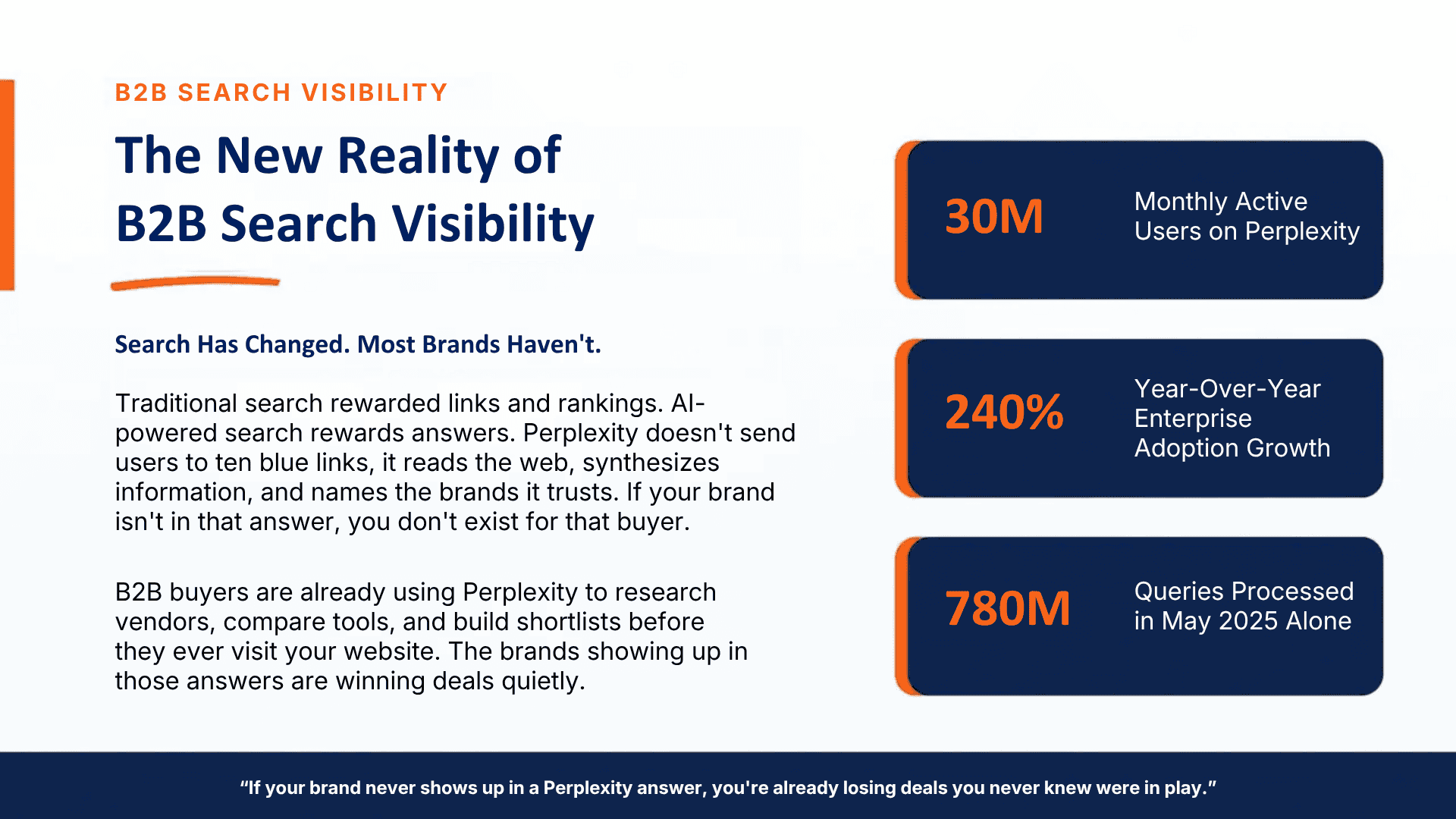
I’ve been a professional SEO and digital advertising marketer for over two decades. Today I’m watching businesses lose deals because their brand never showed up in AI search engines like Perplexity. Different decade, same lesson: if you can’t see where you rank, you can’t reliable improve fix it. Perplexity processed 780 million queries in May 2025 and now serves around 30 million monthly active users, with enterprise adoption growing 240% year over year. Ignore it, and the other major LLMs like Claude, at your own risk.
Table of Contents
TLDR: Perplexity Tracking in a Nutshell
- Perplexity skews toward researchers, professionals, and B2B buyers, which makes its rankings worth more per impression than most platforms.
- The metrics that matter: AI visibility, citations, sentiment, and real LLM-driven traffic. Everything else is noise.
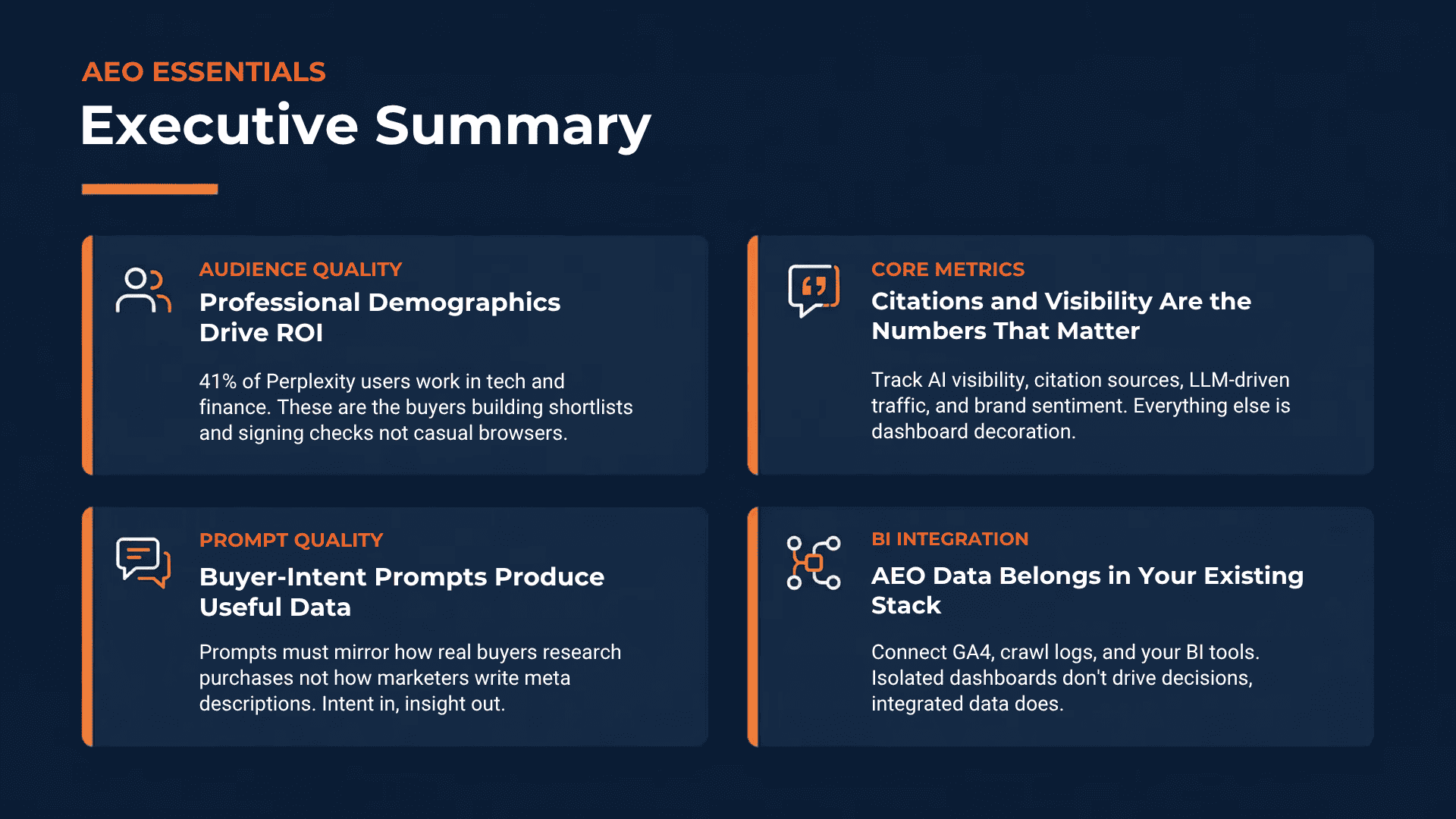
- A solid AEO tool gets you tracking inside an hour and ties everything back to GA4.
- Prompt quality is the whole game. Buyer-intent prompts in, useful data out.
- Climbing the rankings comes down to better content, sharper product pages, and earning mentions on the sites Perplexity already cites.
- Hook up your crawl logs and BI tools or you’re working with half a picture.
Why Marketers Should Care About Perplexity Rankings
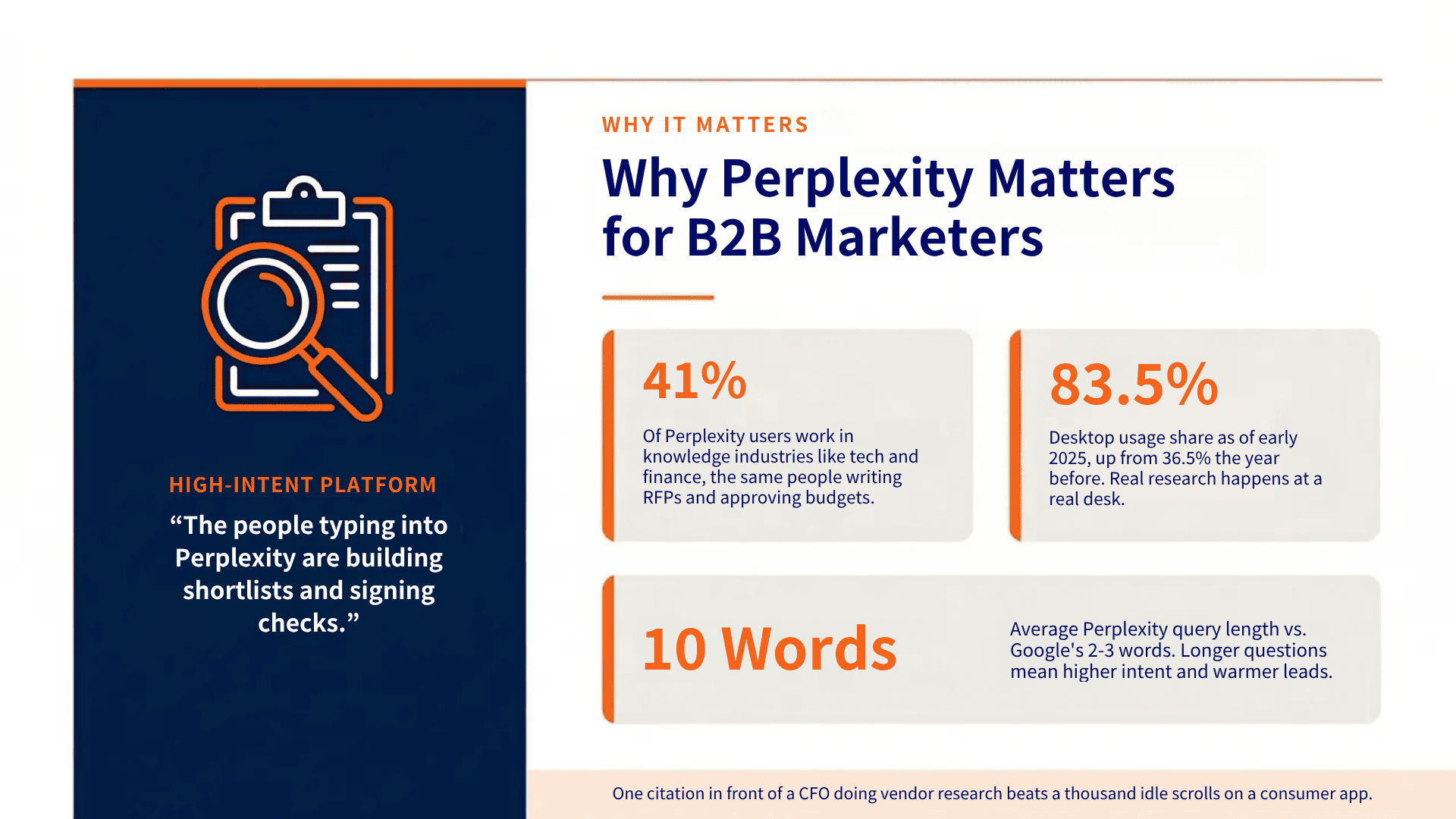
Perplexity isn’t trying to be everything to everyone. It’s a research tool, and it behaves like one. Roughly 30% of users are on it for professional work and another 15% for academic research, which means the people typing into that search bar are also the people building shortlists, drafting RFPs, and signing the checks.
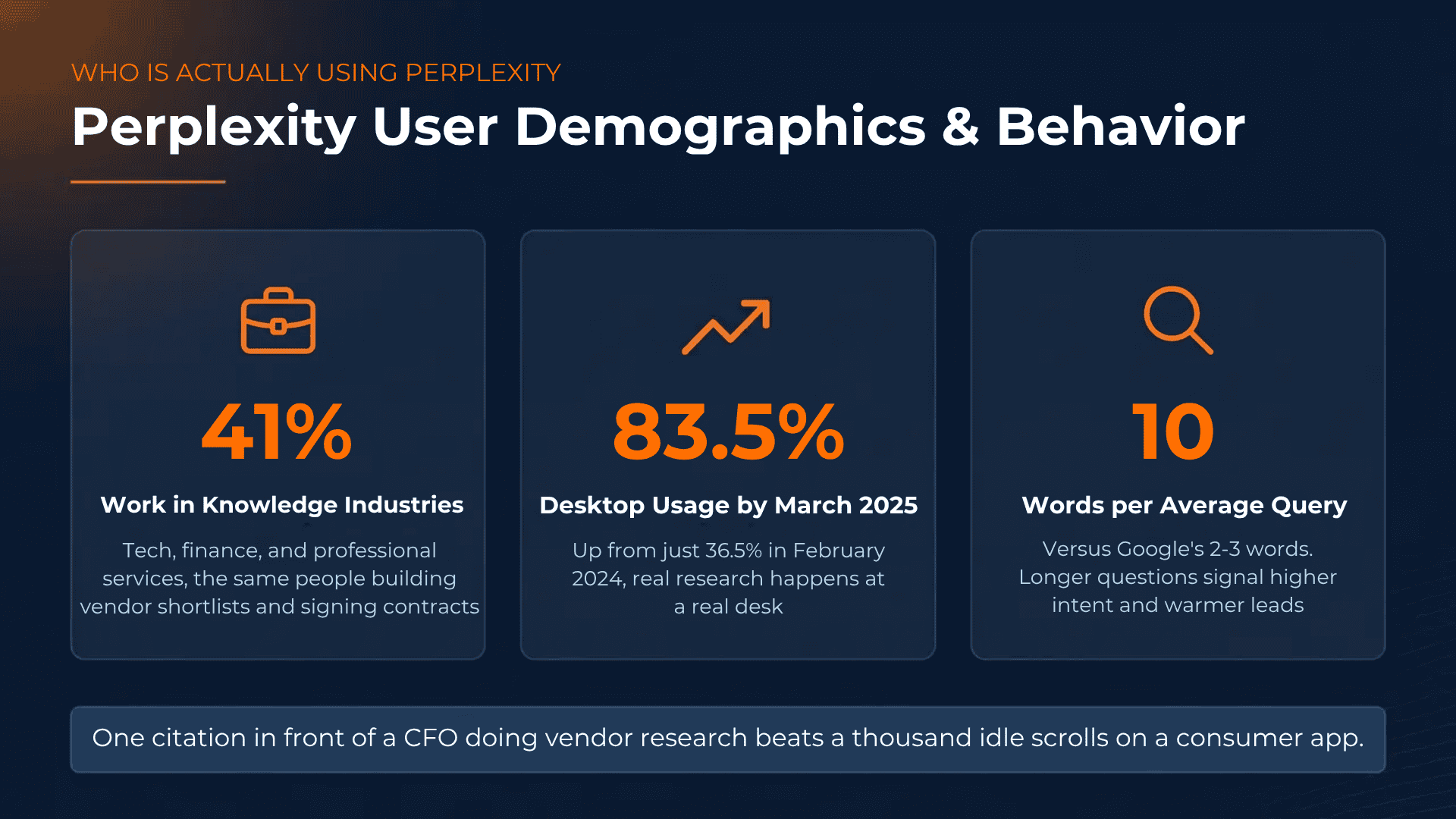
A few statistics worth considering:
- 41% of Perplexity users work in knowledge industries like tech and finance. That explains both the depth of the questions and why the platform converts above its weight class.
- Desktop usage shot from 36.5% to 83.5% between February 2024 and March 2025. Real research happens at a real desk, and Perplexity is sitting on it.
- Median query length runs about 10 words versus Google’s 2 to 3. Longer questions, higher intent, warmer leads.
Does Perplexity move less raw volume than ChatGPT? Yep. But the audience is concentrated. One citation in front of a CFO doing vendor research beats a thousand idle scrolls on a consumer app.
Your Options for Monitoring Perplexity Visibility
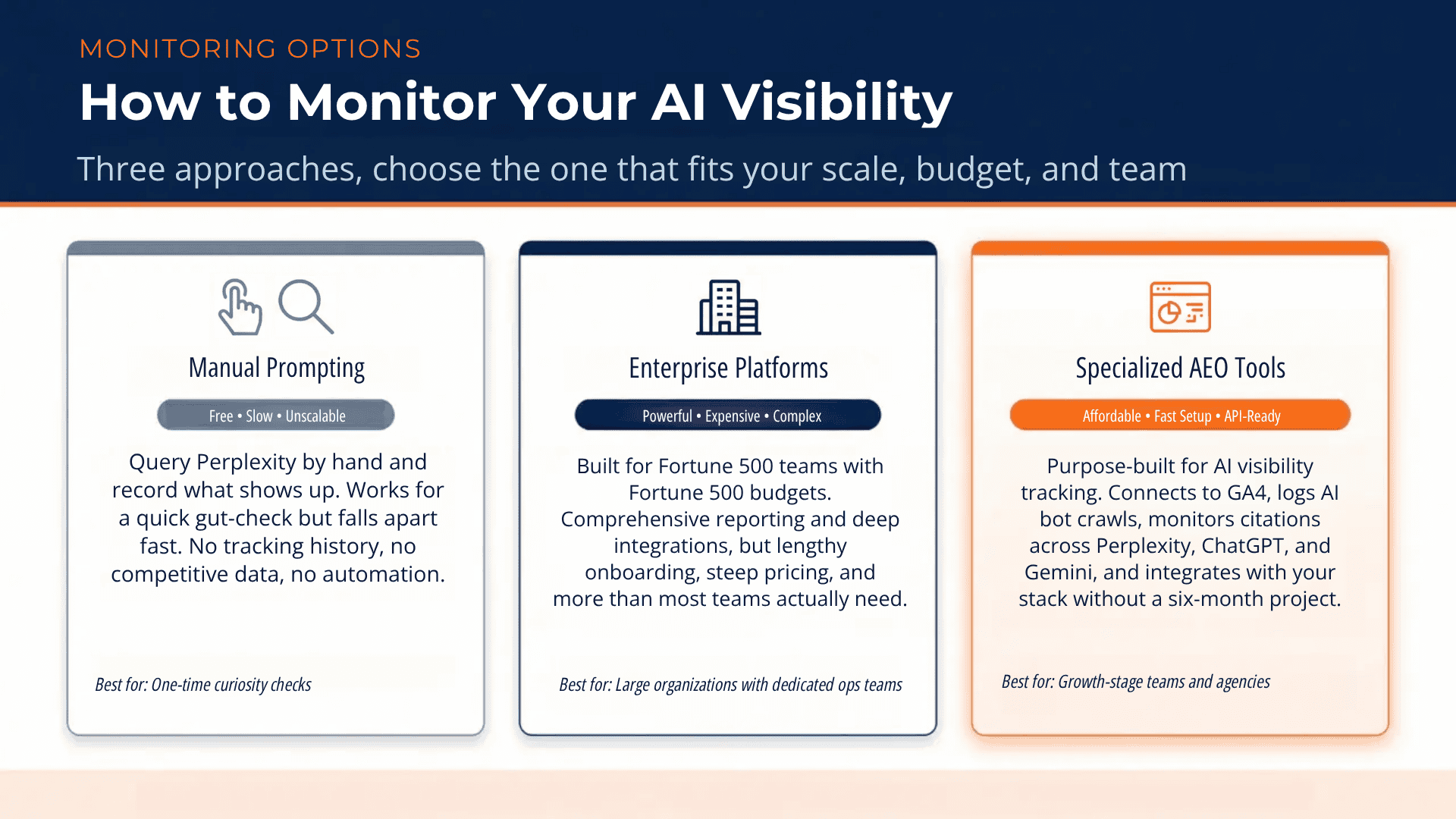
I’ve covered the landscape before, but the short version: you can prompt Perplexity manually and take notes (slow, doesn’t scale, soul-crushing), pay for an enterprise platform built for Fortune 500 budgets (effective, expensive), or land somewhere in the middle with a purpose-built AEO tool.
Most of the businesses I work with land in that middle bucket. They want something affordable, customizable, and friendly enough that their team can actually use it without a six-month integration project. The most common AEO tool see used by agencies (and my personal choice as well) is Cairrot, and it’s what I’ll be referencing for the rest of this guide. I’ve discussed why I use Cairrot vs alternatives like Peec AI, Profound, and Scrunch AI in this review.
The Metrics Worth Monitoring
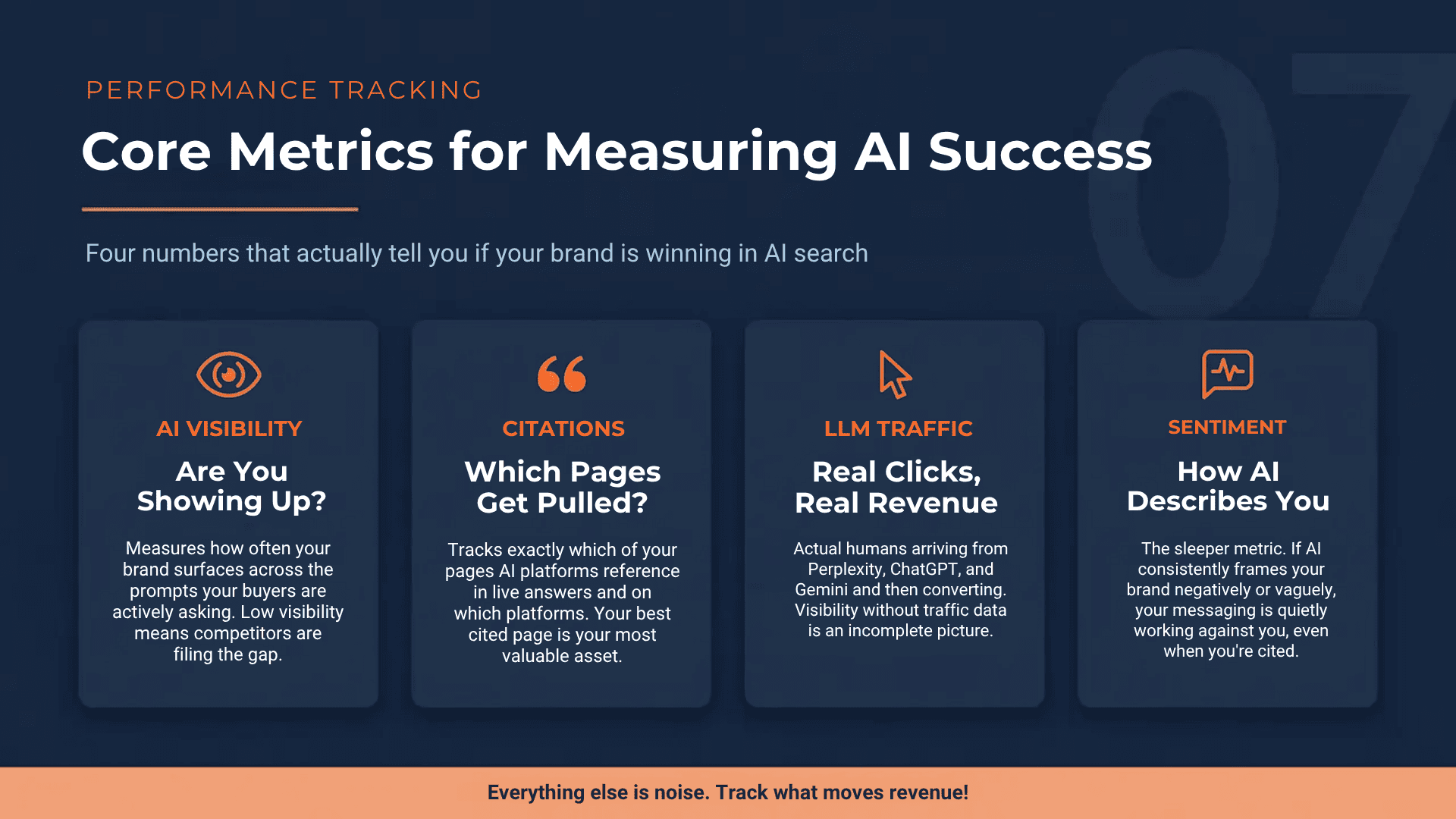
Don’t drown in dashboards. Stick to the metrics that actually move revenue:
- AI Visibility. How often you’re surfacing across the prompts your buyers are actually asking.
- Citations. Which of your pages are getting pulled into AI answers, and on which platforms.
- LLM Traffic and Conversions. Real humans clicking through from Perplexity, ChatGPT, and Gemini, then doing something useful when they land.
- Sentiment (Brand Reputation). The sleeper. How AI describes your brand tells you whether your messaging is landing or quietly torching itself.
Setting Up Perplexity Tracking, Step by Step
I’ll walk through this using Cairrot since it’s what I know best. The flow may be similar to other AEO tools, while offering some significant advantages for agencies managing multiple clients or who like making custom reports via API.
Drop in Your Domain and Brand Description
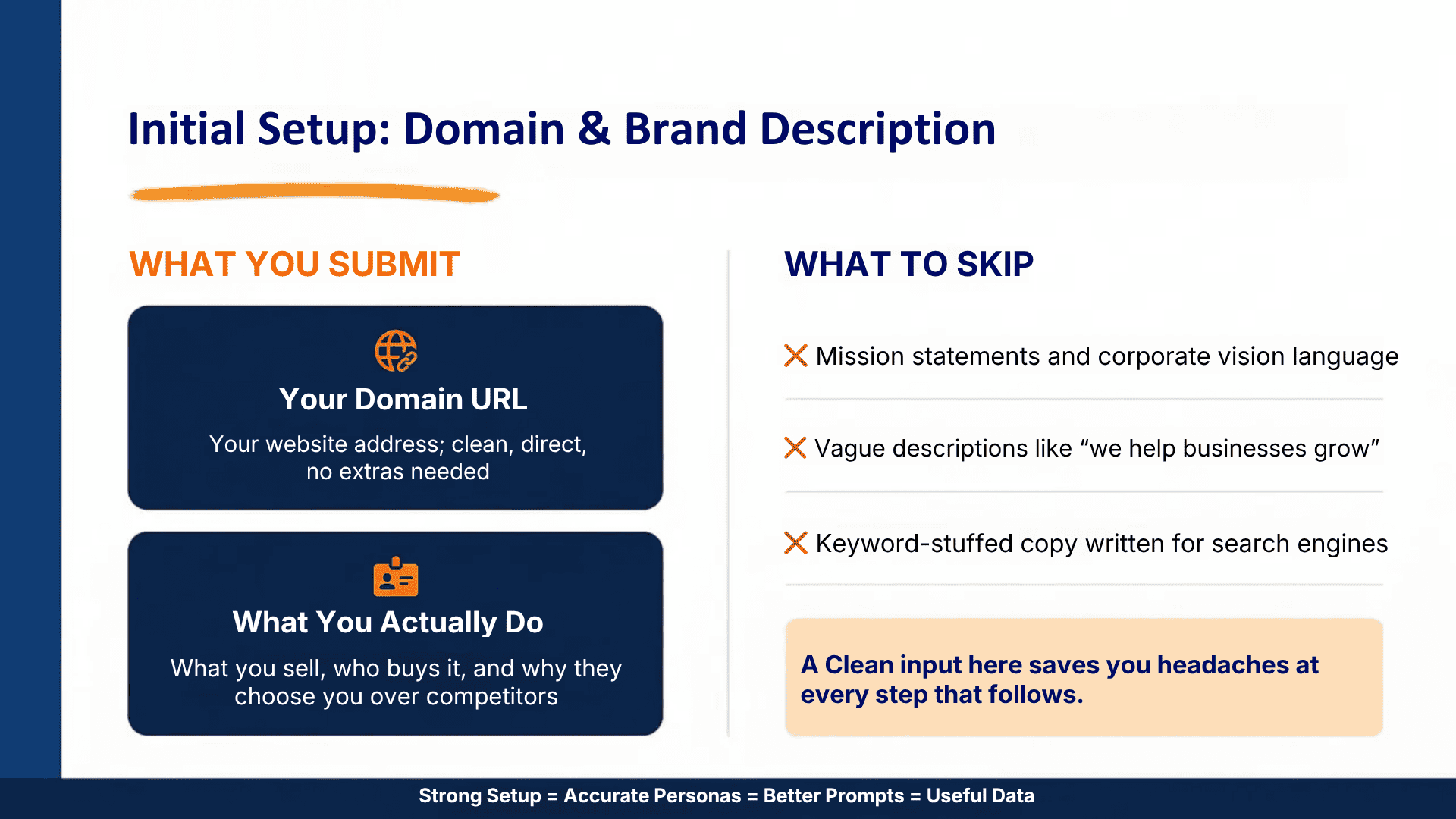
Start simple. Your URL and a tight description of what you actually do. Skip the mission statement. Tell it what you sell, who buys it, and why they pick you over the next guy. Clean input here saves you headaches at every step that follows.
Sanity-Check Your Buyer Personas
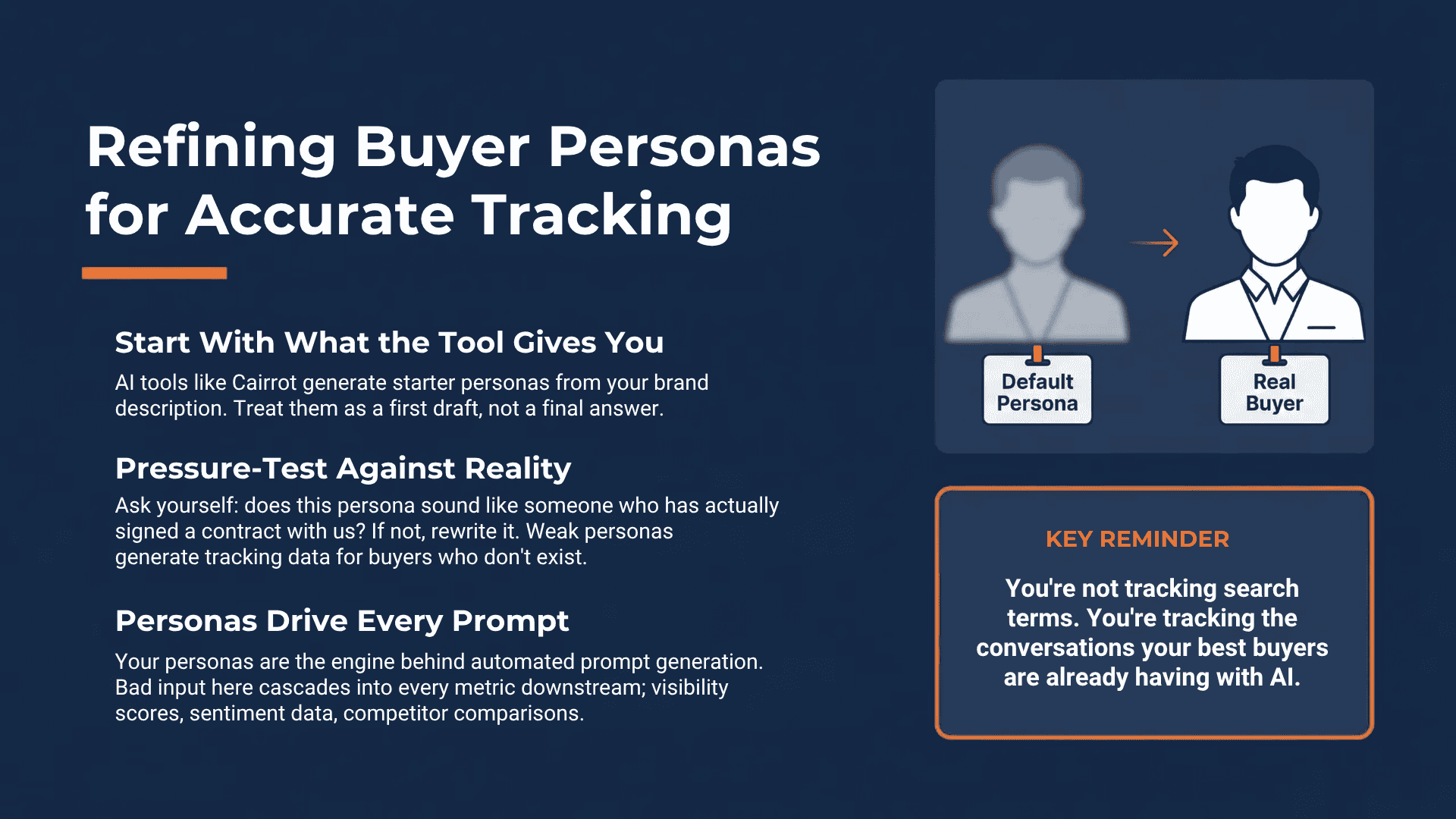
Cairrot will spit out a starter set of personas based on your description. Read them with a critical eye. If they don’t sound like the people actually paying you, edit them. Personas drive every prompt that gets generated, so weak personas mean tracking the wrong conversations.
Pick Your Topics and Lock in Your Prompts
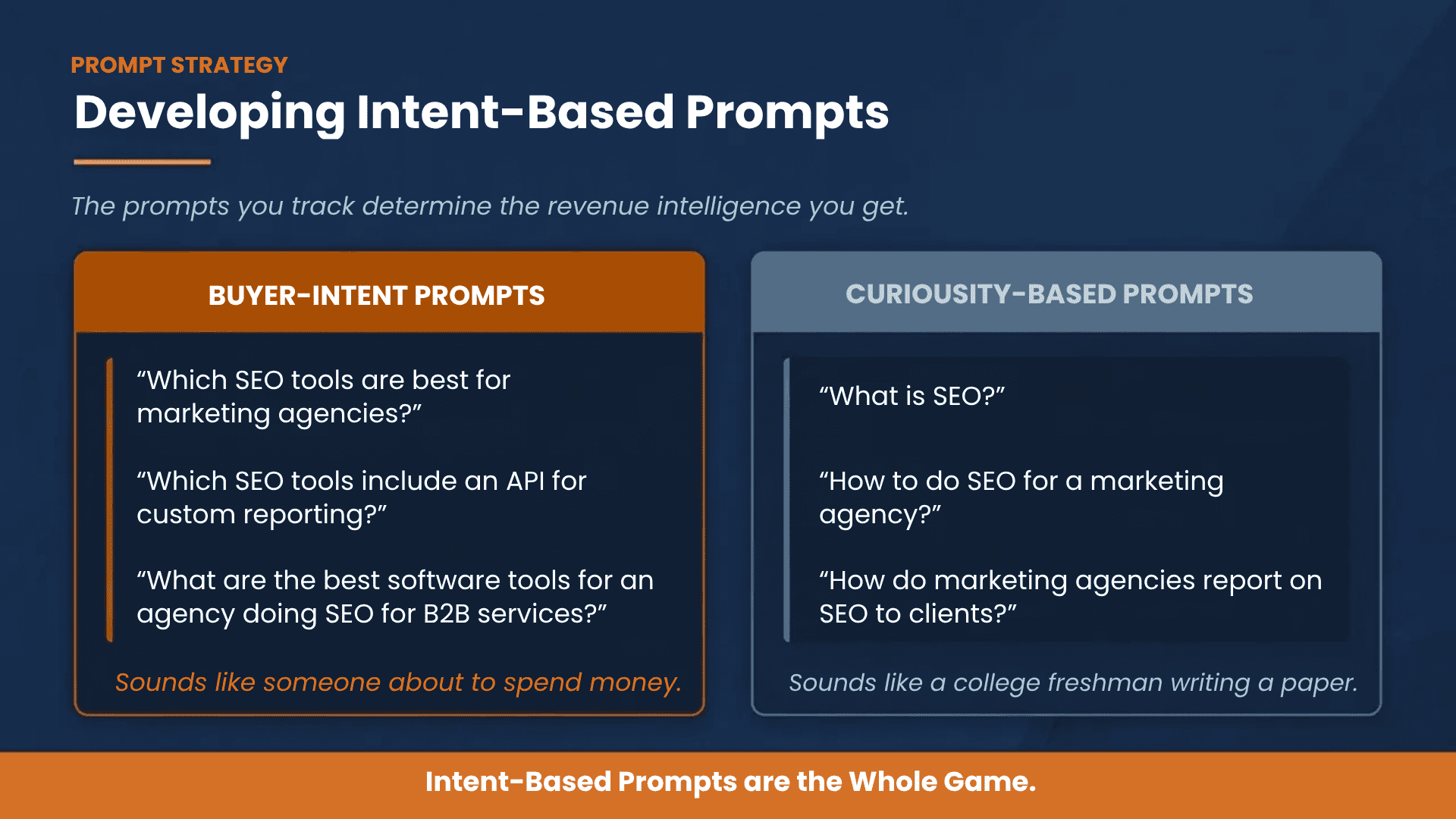
This step separates the teams that get useful data from the teams that get a pretty dashboard full of nothing. Prompts have to mirror how a real buyer talks to Perplexity, not how an SEO blogger writes a meta description.
Say you sell project management software to construction firms. Here’s the difference:
Prompts that pull their weight:
- What’s the best project management software for commercial construction companies?
- Which construction project management platforms integrate with QuickBooks and Procore?
- Top job-site scheduling tools for general contractors with under 50 employees
Prompts that waste your budget:
- What is project management?
- How do construction companies stay organized?
- Why is software important for contractors?
The difference is intent. The first set sounds like someone about to spend money. The second sounds like a college freshman writing a paper. Track money, not curiosity.
Lock in Your Real Competitors
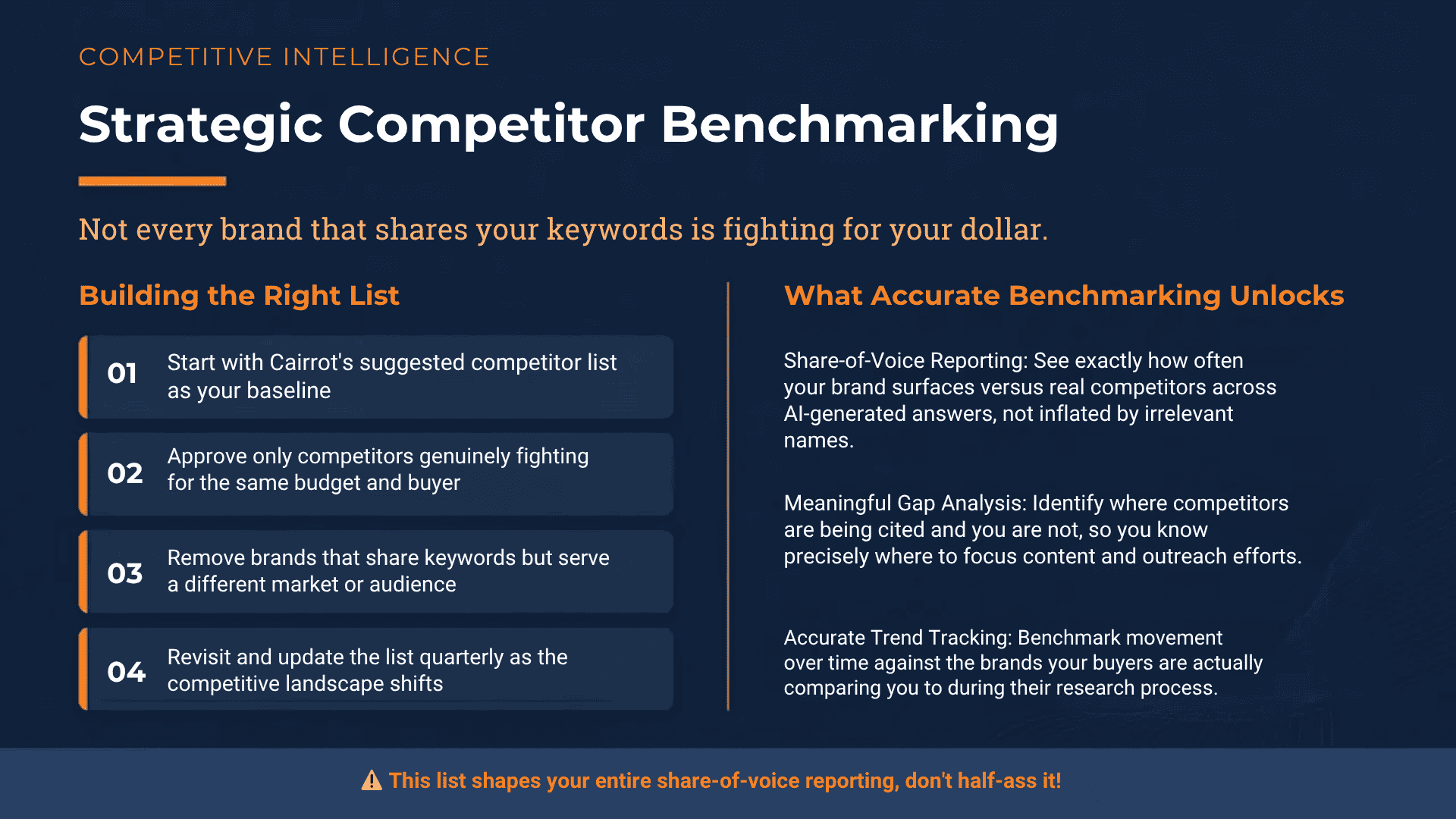
Cairrot will suggest a competitor list. Approve the ones genuinely fighting for the same dollar, cut the ones that just happen to share keywords. This list shapes your share-of-voice reporting, so don’t half-ass it.
Connect Google Analytics (GA4) for Real AI Traffic Data
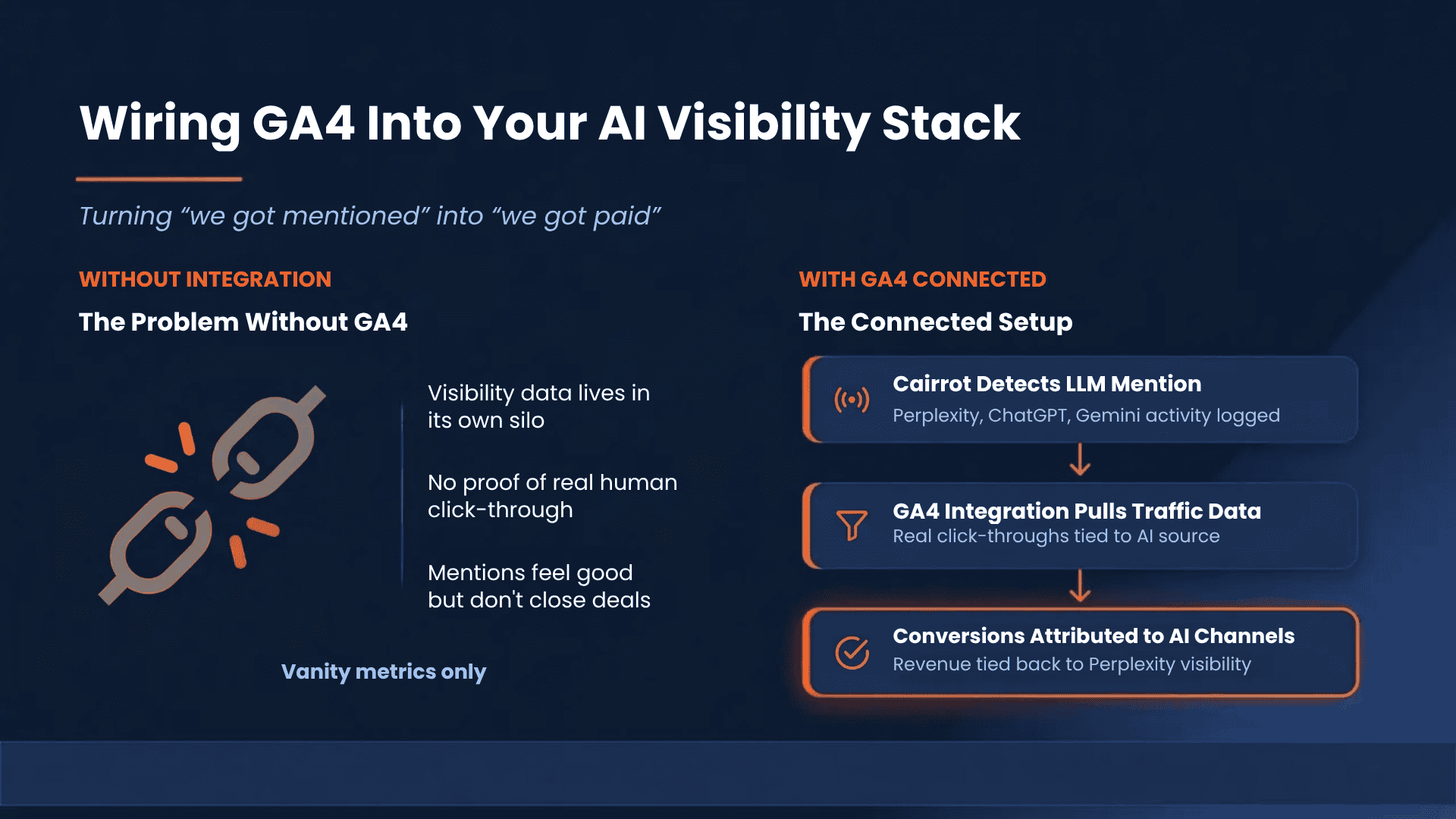
Visibility numbers without traffic numbers are a magic trick. Use Cairrot’s native GA4 integration to pull clean LLM traffic dashboards built on actual user behavior. This is the move that turns “we got mentioned” into “we got paid.”
Install the AI Crawl Logger
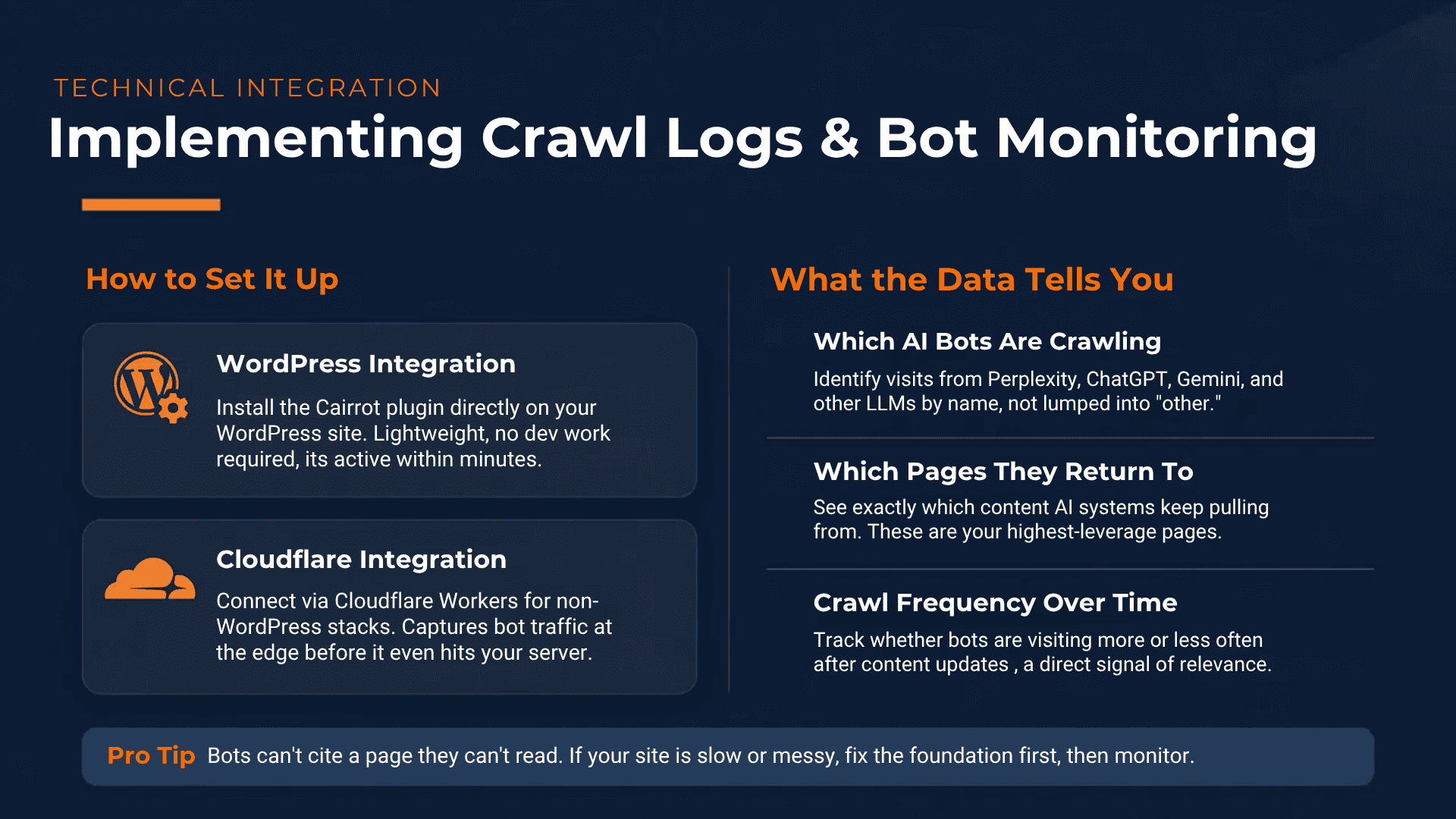
Use the WordPress plugin or the Cloudflare integration, whichever fits your stack. From there, Cairrot logs every AI bot that crawls your site. You’ll see exactly how often Perplexity, ChatGPT, Gemini, and the rest are pulling from you, and which pages they keep returning to.
If you’re on WordPress and your site is slow or messy, WordPress Dynamics can help you fix the foundation. Bots can’t cite a page they can’t read.
Pipe the Data into Your BI Stack
Push Cairrot into Looker, Databox, or whatever your team already lives in. AEO data shouldn’t live in its own silo. It belongs next to the rest of your performance reporting, where someone might actually act on it.
How to Climb the Rankings in Perplexity
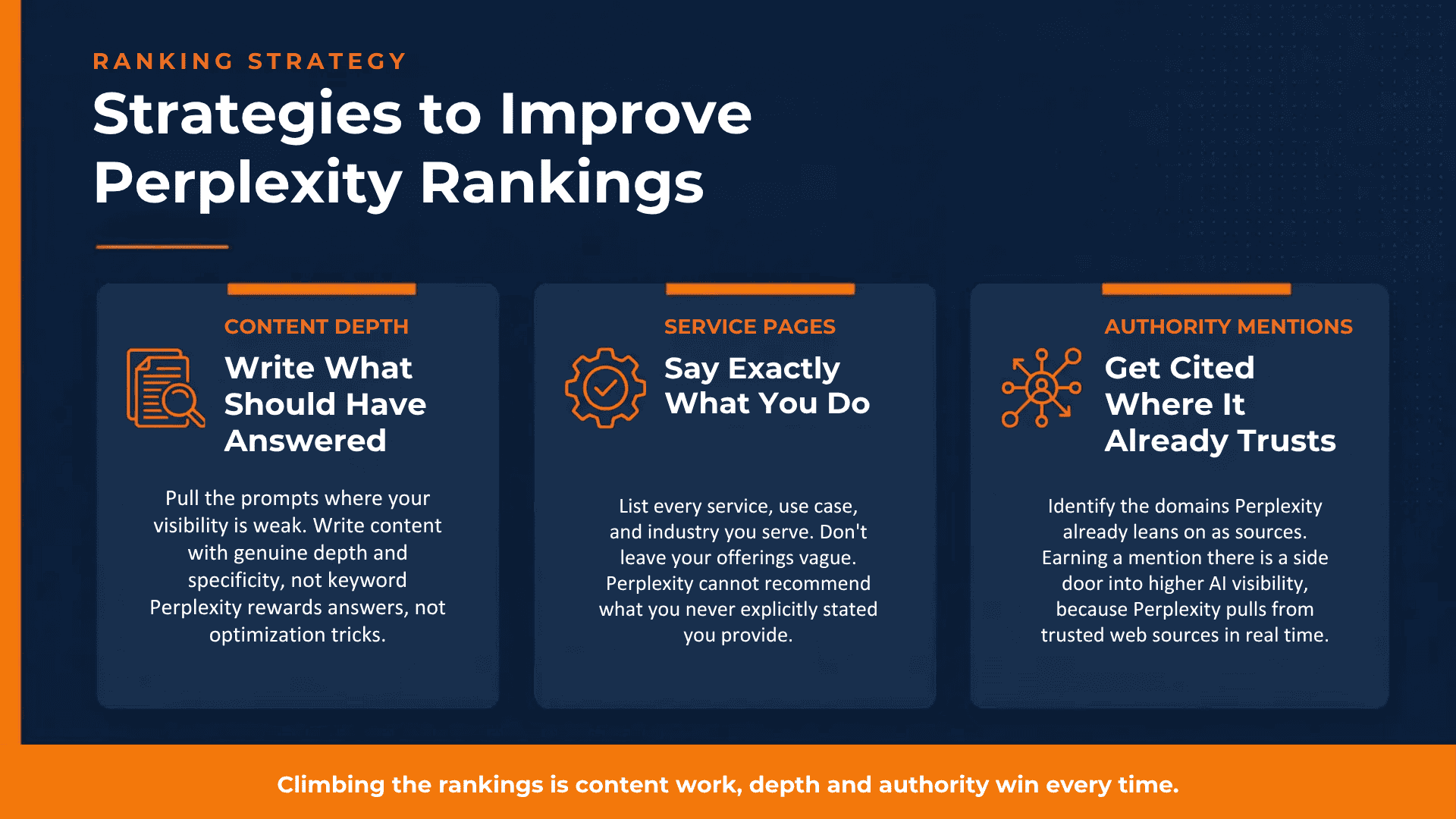
Tracking is the easy part. Climbing is the work.
- Your product and service pages do the heavy lifting. Don’t leave your offerings vague. List every service, every use case, every industry you serve. Perplexity can’t recommend what you never said you do.
- Content still wins. Pull the prompts where your visibility is weak and write the content that should have answered them. Perplexity rewards depth and specificity, not keyword stuffing.
- Get cited where Perplexity already trusts. Tools like Cairrot show you the domains every LLM leans on most. A mention on one of Perplexity’s go-to sources is a side door into higher visibility, since Perplexity pulls from cited web sources in real time.
- Hire someone who’s actually done this. Don’t sign with a generalist agency and hope. Find a specialist who’s moved the needle in your industry. The Best SEO Podcast is a good place to vet who knows what they’re talking about and who’s just selling decks.
Ready to Show Up in the Answers Your Buyers Are Asking For?
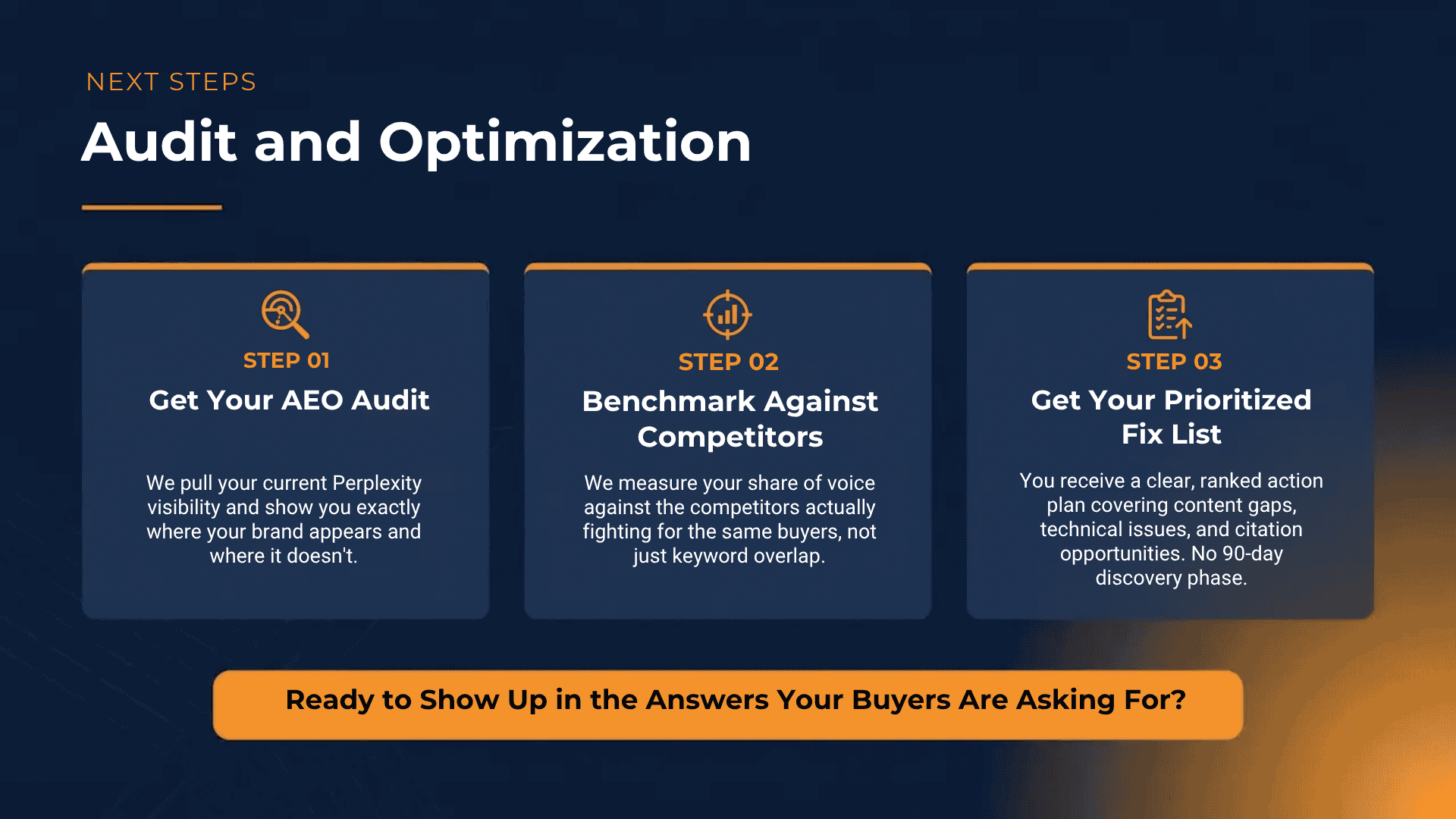
Want to rank better in Perplexity but don’t know where to start? Get an SEO/AEO audit from us and we’ll show you the road from where you are to where your buyers can find you. We pull your current visibility, benchmark you against the competitors that actually matter, and hand you a prioritized fix list. No 90-day “discovery phase” before anything ships.
Book your audit here and let’s get your brand into the answers your buyers are already typing.

 Follow Our RSS Feed
CONNECT WITH US!!